Feasibility study
EU Horizon Europe missions in Romania
This study presents the results of the assessment of the long-term strategies (LTS) of the European Union Member States, available at the time of writing (October 2023). This analysis is complemented by a summary summarising the main findings and recommendations. Two particularly important aspects are considered: the vision for a low-emission future and the preparation and use of the strategy.
Through the analysis carried out, we highlighted the most recent and significant developments in the field of smart and climate-neutral city governance. This study provides a broad perspective on the current context. Its implementation began in the first year of the project and was completed in 2025, with the emergence of the National Integrated Plan for Energy and Climate Change 2021-2030, at the national level.
The legislative framework and existing regulations are explored, as well as Romania’s strategy to address energy, climate and urban development issues. Perspectives on the debate and legislative proposals that may influence the direction of future development in these areas are analyzed.
The study is available only in Romanian language.

Governance of smart and climate-neutral cities
NetZeRoCities book
🗣️ How can our cities become smarter and, at the same time, climate neutral?
📖 The volume “Governance of Smart and Climate-Neutral Cities” proposes an answer based on research and concrete examples. The work explores how public policies, data and digital technologies – such as the Digital Twin – can support urban decisions and the transition to net zero emissions.
🏙️ European and national strategies are analyzed, as well as practical tools for monitoring emissions and engaging the community in the urban transformation process.
📘 A useful resource for administrations, researchers and all those interested in the future of cities.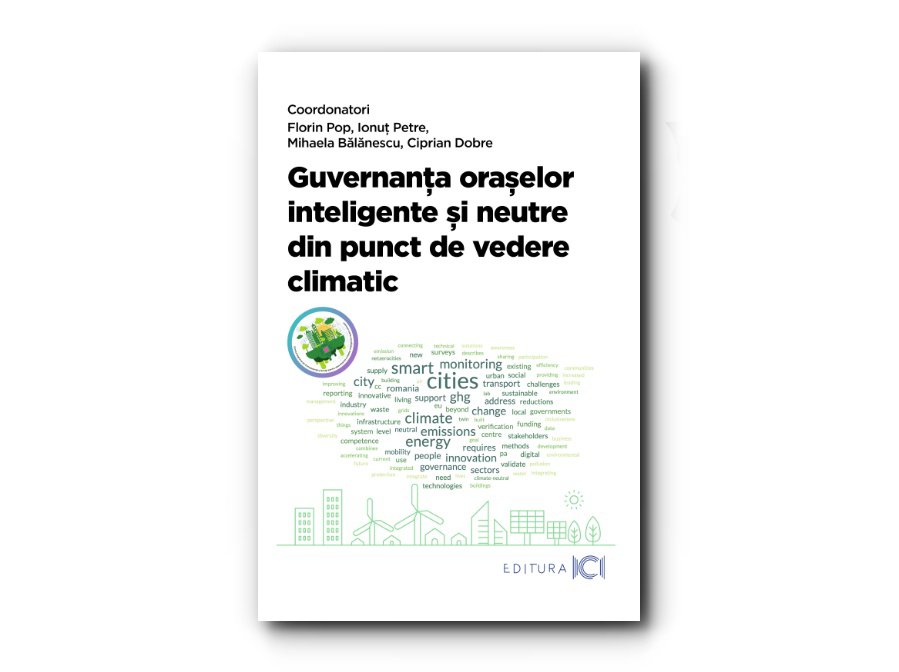
Multi-level governance models for smart cities
NeZeRoCities book
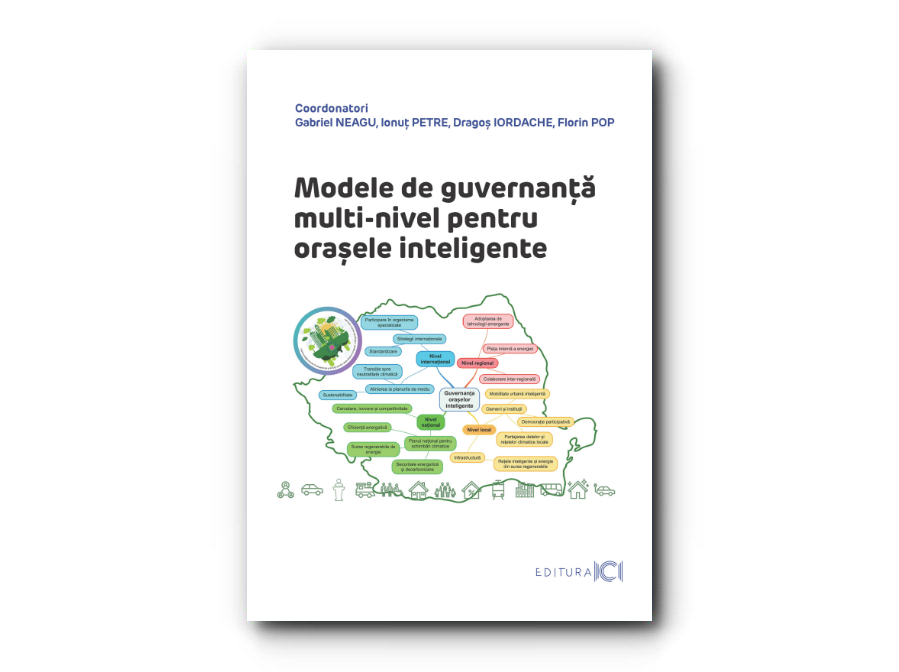
🗣️ The transition to smart and climate-neutral cities is not just a technological issue – it is, first and foremost, a governance issue.
📖 The volume “Multi-level Governance Models for Smart Cities” analyzes how cooperation between levels of government – European, national, regional and local – can accelerate the response to climate challenges.
📚 The book brings to the fore:
- the role of multi-level governance in the implementation of climate policies;
- the importance of co-creation and involvement of local actors;
- analysis of European and national strategies (including PNIESC);
- concrete examples from European and Romanian cities.
📘 Based on these analyses, a governance model focused on cooperation, transparency and continuous institutional learning is proposed.
👉 This work capitalizes on the results of the NetZeRoCities project and contributes to the development of a coherent framework for transforming cities into sustainable ecosystems.